A plant first
Zaatar is a wild herb of the Levant, close to oregano, growing on the dry stony slopes of Lebanon, Syria and Palestine. It is picked in spring, dried in the shade, and it is that dried leaf which gives the blend its name.
In the mountain villages of the Chouf, where our family comes from, gathering zaatar is a seasonal affair, like the olives. Enough is dried to last the year, and every household has its own measure.
Then a blend
The blend you find on sale brings together four things: dried zaatar, sumac, toasted sesame and salt. Sumac is a dried red berry that adds a clean, lemony sharpness — it is what stops the mixture from being merely herbal. The sesame brings fat and toast.
Proportions vary from one region to the next and from one family to another. Some blends are deep red, heavy with sumac; others stay green and herb-led. There is no official recipe, and that is exactly why you can recognise someone's zaatar.
Manakish, its most common use
You mix zaatar with olive oil until it forms a loose paste, spread it over a disc of bread dough, and bake it. That is manakish — the Lebanese breakfast, sold at the neighbourhood oven from dawn, eaten hot, folded in two, often on the move.
There are variations: cheese, minced meat, half and half. But the zaatar version remains the benchmark, and it is the one that serves as a test. A good manakish has a thin base, slightly puffed edges, and a topping that stays moist without soaking the bread.
How to use it at home
Zaatar is not really cooked: it is laid on. Over labneh, that strained fresh cheese, with a thread of olive oil. Over sliced tomatoes. On toast. In a salad, in place of pepper.
One word of caution: it keeps badly. Toasted sesame turns rancid and sumac loses its sharpness within months. Buy small amounts, keep the bag sealed away from light, and trust your nose — a zaatar that no longer smells of anything will give you nothing.
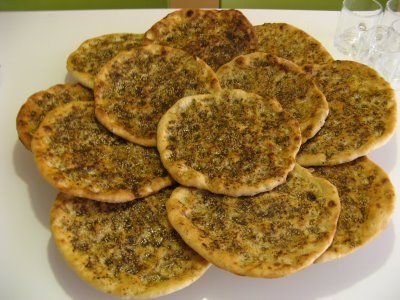
Zaatar manakish fresh from the oven